CultureHub

Your people have had the development. But has your business seen the difference?

Let’s turn development into performance →

You've run internal programmes. Brought in external providers. Invested in e-learning, playbooks, workshops and coaching.

You've invested the time, the money and the effort. Your people have learnt new things. They might even have loved the experience.

But are they doing anything differently?

Are your leaders having better conversations? Are your salespeople winning more business? Are your teams working better together?

Because learning something and changing how you work are two very different things.

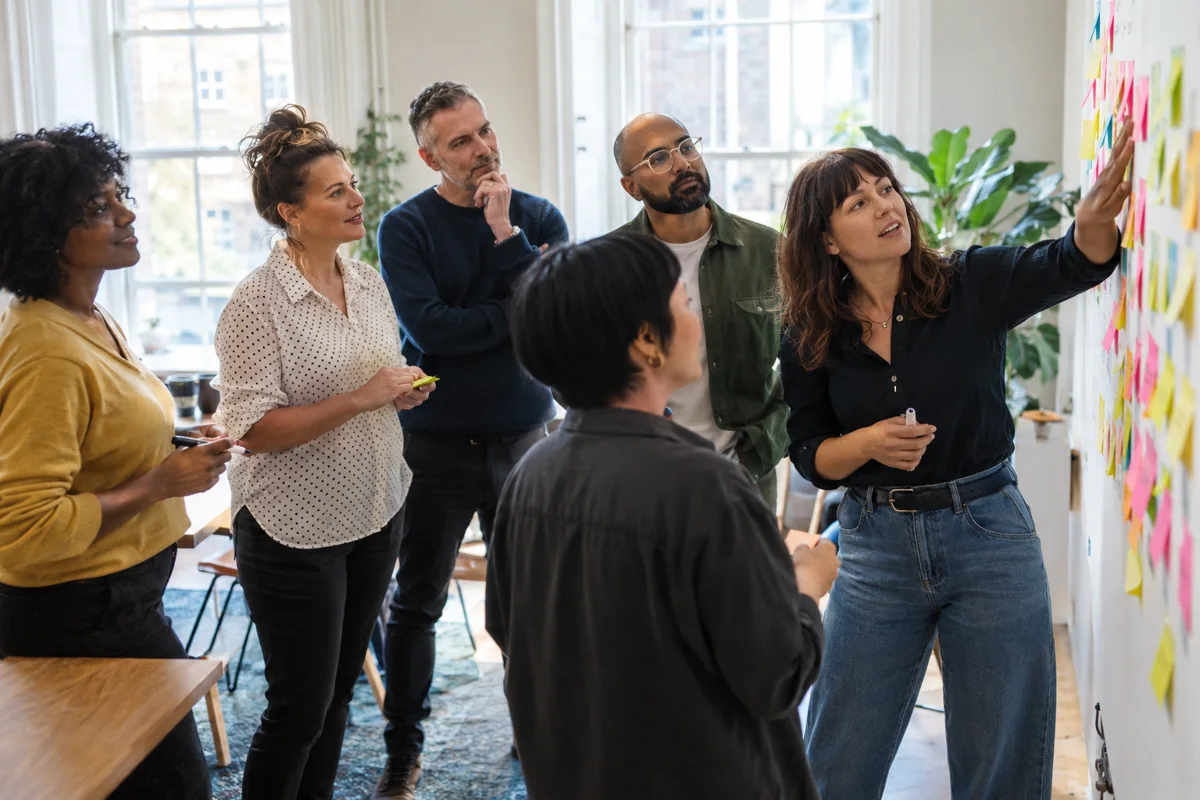
Business professionals exploring customer priorities

At CultureHub, we're here to turn learning into lasting behavioural change that drives performance.

So what's stopping all that learning from becoming lasting change?

We've worked with enough people and organisations to notice a few familiar patterns.

Here are five things we see time and time again.

01They think they're doing just fine, thank you.“I've been doing this for years. I know what I'm doing.”Explore this

Experience is wonderful. But sometimes it convinces us there's nothing left to learn.

When people don't believe they need developing, they're unlikely to arrive curious, enthusiastic or particularly open to doing things differently.

They'll attend the training. They might even enjoy it.

But if they had to pay for that development out of their own salary, would they still want to attend?

You can't fill a cup that someone thinks is already full.

02They don't know what they don't know.“I think I'm pretty good at that, actually.”Explore this

And they might be.

But what we believe we're good at and what others experience aren't always quite the same thing.

Without meaningful feedback or an opportunity to put our abilities to the test, blind spots remain blind spots.

If you can't see the gap, how do you know what to work on?

03Their managers aren't part of the journey.“That sounds great. Anyway, back to your targets…”Explore this

People leave development with new ideas, fresh enthusiasm and every intention of putting things into practice.

But their manager doesn't know what they've learnt, what they're trying to change or how to support them.

So the familiar routines take over.

New behaviours need more than good intentions. They need an environment that helps them stick.

04The development is about as exciting as watching paint dry.“Only another 76 slides to go…”Explore this

Another presentation. Another e-learning module. Another hour listening to someone explain how to do something.

Meanwhile, someone's mentally writing their shopping list.

Knowledge is useful. But listening to someone describe a skill isn't the same as being able to use it.

People need to try things, make mistakes, reflect, improve and have another go.

Because you don't get better at doing something by just hearing about it.

05It doesn't feel anything like their world.“That's lovely in theory. You should meet my customers.”Explore this

Perfect conversations. Conveniently cooperative colleagues. Scenarios where everyone says exactly what the textbook suggests.

Unfortunately, real life hasn't read the textbook.

Customers challenge you. Teams disagree. Priorities change. Difficult conversations rarely go according to plan.

And when development feels disconnected from the challenges people actually face, applying it becomes a challenge of its own.

If it doesn't feel relevant on the day, why would anyone use it the next?

Recognise a few?

Perhaps one. Perhaps all five.

None of these problems is solved simply by delivering more training.

They need a different approach to development. One that considers what happens before people learn, how they experience it, and what happens when they return to work.

That's where CultureHub comes in.

Discover our approach →

More training isn't always the answer.

Sometimes, you need to ask better questions.

Before we recommend a programme, design a workshop or deliver a single module, we want to understand something.

What are you actually trying to achieve?

And what's stopping you from achieving it today?

We'll get curious about your business, your people and what's been tried before. We'll listen, challenge assumptions and occasionally question the brief.

Because sometimes the answer isn't another workshop.

We'd rather help you solve the right problem than deliver a brilliant solution to the wrong one.

Then we make development work harder.

Not by adding more content. By making every part of the experience count.

Make it matter.

Help people discover what's in it for them. Why is this worth their time? What could become easier, better or more rewarding if they changed how they work?

Make it visible.

Help people recognise their strengths and the gaps worth closing.

Make it real.

Less chalk and talk. More do and review, using their actual challenges.

Make it everyone's business.

Involve leaders and build connections that support new behaviours.

Make sure it makes a difference.

Come back to discover what's been applied and what impact it's had.

Because the real test of development isn't what happens in the room. It's what happens back at work.

Discover our approach →
Three professionals practising a conversation during a facilitated workshop

What would you love your people to do differently?

Forget the course catalogue for a moment.

Think about the conversations you'd love them to have. The challenges you'd love them to handle. The opportunities you'd love them to seize.

What would better actually look like in your business?

A leader listening to a colleague during a coaching conversation

For your leaders

Leadership

Less managing the work. More bringing out the best in people.

Imagine leaders who don't shy away from difficult conversations. Who coach rather than provide all the answers. Who empower their people, inspire confidence and help them navigate change.

Explore Leadership →
Business professionals discussing customer priorities

For your salespeople

Sales

Less selling what you do. More understanding what your customers need to achieve.

Imagine salespeople who understand customers' businesses. Who uncover commercial priorities, connect their offer to what matters and build reasons to act. People customers see value in buying from.

Explore Sales →
A customer success professional reviewing progress with a customer

For customer success

Customer Success

Less talking about value. More helping customers realise it.

Imagine customer success teams who know what success looks like for customers. Who help them achieve it, demonstrate the value delivered and turn relationships into renewals and growth.

Explore Customer Success →
Colleagues sharing ideas in a facilitated team workshop

For your teams

Teams

Less working alongside each other. More achieving together.

Imagine teams with a shared direction and a clear sense of everyone's contribution. Who value their differences, challenge each other constructively and achieve more together than working alone.

Explore Teams →

You can't close a gap you can't see.

Meet The Hub.

Before deciding what development people need, wouldn't it help to understand where they are today?

What are they already brilliant at? Where are their blind spots? And where could developing the right behaviours make the biggest difference?

That's why we created The Hub.

Three connected tools that help people understand themselves, discover how others experience them and see where they have the greatest opportunities to improve.

DISC. Development Compass. AI Voice Simulations.

Working together to take the guesswork out of development.

Less guesswork. More Return on Development.

Discover The Hub →

Don't just take our word for it.

We can tell you why real-world application matters. But the most interesting evidence comes from people who go back to work and do something differently.

A challenging conversation handled with more confidence. A commercial opportunity approached in a new way. A team putting learning into practice.

The development is only the beginning. What people do afterwards is the story worth telling.

“I gained a ton from these sessions that I seriously use every single day.”

Account Manager, global B2B insights organisation
Explore our success stories →
Colleagues reviewing progress together

Imagine what could change if your people did.

Better conversations. Stronger relationships. More confident leaders. Greater commercial success.

You've already invested in your people.

Now let's explore what could become possible when development turns into lasting change.

Start with the challenge that needs attention now. You don’t need a finished brief to have a useful conversation.

Let's have a conversation →

Some of the organisations we’ve worked with